
The conversation often starts quietly. A parent who has cared for the family altar for years says the daily routine is becoming difficult. Their children want to help, but none is ready to take the altar into another household. Moving an ancestral tablet to a temple can be a practical way to continue remembrance, provided the family understands the receiving arrangement and gives the person who maintained the altar a real voice in the change.
Our ancestral tablet service and the dedicated pedestal settings at Lin San Temple and Thian Leng Temple offer places to begin that discussion. The transition should be planned around the family’s tradition, the actual tablet arrangement and the people who will continue visiting.
Moving an ancestral tablet to a temple is also a change in family routine
A home altar may be connected with ordinary moments: preparing an offering, tidying the area or pausing before leaving the house. A temple arrangement brings remembrance into a shared setting outside the home. The family may welcome the practical relief while still feeling emotional about the change. Give both reactions room.
The person who has maintained the altar may worry that their work will be forgotten or that the younger generation will stop visiting. Listen to that concern before discussing designs. A clear visiting plan, a careful explanation of the new setting and the chance to attend a viewing can help the transition feel like a continuing family responsibility.
There may also be relief. Someone who has quietly carried the task for years may appreciate being able to visit without managing an altar at home. Avoid making them defend that feeling. Practical circumstances change, and a dedicated memorial pedestal can provide another way for the family to keep a place for remembrance.
The home-altar carer’s wishes belong in the temple discussion
Ask the carer which parts of the existing practice matter most to them. It may be a particular observance, the written names or the wish that siblings can all visit. These details help the family describe what it hopes to preserve. They are more useful than assuming the entire home arrangement must be reproduced exactly in a different setting.
If the person wants religious guidance, include that early. They may need an explanation of how the transition is understood within their own tradition. A calm conversation with the appropriate adviser is preferable to a child collecting contradictory instructions from several informal sources and asking the parent to choose between them.
See the temple pedestal as a real destination for future visits
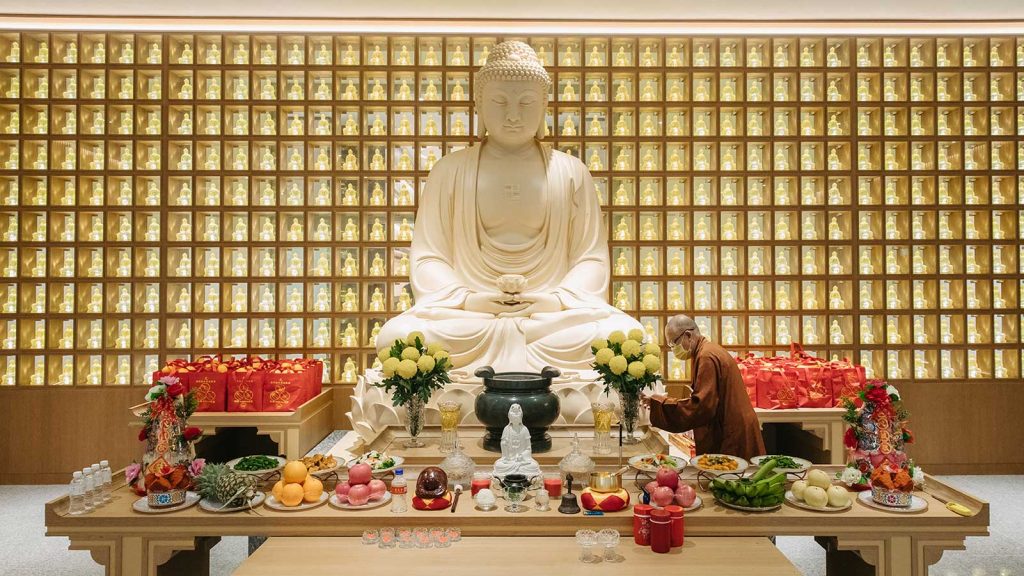
At Lin San Temple, ancestral pedestal areas are part of a Buddhist temple setting that also includes a niche suite and Mini Buddha displays. A viewing lets the family understand the atmosphere and identify the actual pedestal being considered. It can be especially useful for a parent who has only seen a small image shared by their children.
Thian Leng Temple provides another temple setting in the Kembangan area, with a modern pedestal design integrating traditional religious elements. For some families, that combination of contemporary surroundings and a temple environment may feel comfortable. The appropriate comparison is the one between the family’s real needs and the actual arrangement available.
A family may also want to consider Nirvana Memorial Garden in western Singapore, where greenery, cultural architecture and Buddhist chanting create a dedicated memorial environment. A garden environment and a temple environment can offer different experiences. Exploring them helps relatives explain what they value rather than agree to the first option because it is unfamiliar to everyone.
A shared ancestral pedestal can spread the visiting responsibility
With the tablet in one home, other relatives may depend on that household’s availability to visit. A dedicated memorial setting can give the family a common destination beyond a private home. The current access arrangements still need to be understood, but the responsibility for remembrance can become easier to share between households.
Discuss how that sharing will work in practice. One sibling might accompany the older parent, while another joins when returning from overseas. A larger family occasion may happen separately from quiet individual visits. The arrangement becomes more useful when relatives understand that they can contribute without waiting for one person to organise every outing.
Agree the religious transition before dismantling the home altar
The actual transition deserves its own discussion. The family should understand whether the existing physical tablet is to be received, whether a new inscription is involved and what the chosen venue requires. These details depend on the arrangement. Do not assume that a tablet can be removed from home and placed directly into any pedestal display.
For families who wish to observe religious rites, obtain guidance suited to their practice and the receiving venue. A general online explanation cannot establish the right sequence for every household. Ask the adviser to explain the purpose of any proposed observance in plain language so that relatives know what they are arranging.
Private prayers can be discussed as part of the family’s transition
Our prayer services include private arrangements and festival observances. Families who want organised religious support can discuss these when planning a transition from a home altar. Confirm what is appropriate and available for the actual transition, including the venue, participants and any separate charge.
A private observance may serve a different purpose from a later Qing Ming visit or another festival gathering. Keep those intentions clear. A family should not leave the first conversation believing that every future occasion has been arranged merely because it discussed prayers around the initial placement.
Explain the agreed sequence to the relatives who will attend. Some may have helped with the home altar for years; others may be joining this kind of arrangement for the first time. Knowing where to go, what the occasion involves and whom to ask gives everyone a calmer way to participate.
Preserve the family knowledge that lived around the altar
The physical tablet is only one part of what the older generation has cared for. They may know how names are connected, why a particular date matters or which memories the family associates with the altar. Before the home setting changes, invite them to share what they want the younger relatives to know.
Keep the explanation accurate and proportionate. A simple private family note can identify the people remembered, the written names and the relationships. Genuine stories can be recorded with permission. These details help the next generation understand the memorial without expecting the formal inscription to carry a complete family history.
The Singapore Chinese Cultural Centre’s account of Qing Ming provides background on remembrance in local Chinese culture. It can support a family conversation about continuity. The specific meanings and observances of a family’s altar should still be explained by the people who know them and the relevant religious adviser.
For an adult child who never learned the practice, saying “I don’t know how this works” is a useful beginning. It creates room for an explanation. Pretending to understand can leave important details unspoken until the person with that knowledge is no longer available to help.
Make the new temple arrangement understandable before it is final
Identify the actual pedestal, the names it will carry and the written terms that apply. If the family sees several options during a viewing, keep a record of which one is being discussed. An attractive photograph of a different hall should not become the reference for an arrangement selected elsewhere.
Review the inscription with someone who can check the written names. Where Chinese characters or English spellings differ between family records, resolve the difference before approval. If more than one relative reviews the wording, make sure everyone is looking at the current version.
Ask for a clear explanation of care and ongoing responsibilities. The family should know which parts are covered by the arrangement, what remains its responsibility and how future questions are handled. A dedicated memorial setting is reassuring when those practical boundaries are understandable, rather than hidden inside a broad promise.
We explain the available arrangements with care for your family’s preferences, in keeping with our service commitment. Tell us which part of the transition is hardest to understand. It may be the religious sequence, the practical handover or the older parent’s concerns. A focused explanation can make the decision easier to share within the family.
A smaller household may need a different kind of altar support
For a parent living alone, the wish to change the arrangement may come from having fewer people available to help. A child should not assume the parent wants the same daily practice transferred to the child’s home. Ask what support would feel useful. The answer may be help continuing at home, or it may be the opportunity to consider a temple pedestal together.
A couple whose children have moved abroad may reach a similar decision for a different reason. They may still be comfortable caring for the altar today but want a plan that does not leave the children uncertain later. In that case, the viewing can be exploratory. Understanding the temple options does not require treating the current home arrangement as a problem that must be removed immediately.
For a family in which several siblings have different beliefs, the challenge may be finding a shared place everyone can approach respectfully. A temple setting can provide a specific environment for discussion, but the family still needs to talk about participation. Quiet attendance, practical help and religious observance can be different contributions to the same family’s remembrance.
These situations benefit from a service conversation that begins with the people involved. Our dedicated pedestal settings and wider pre-planning support let the family consider the memorial place alongside its practical concerns. Describe what is changing in the household and what you hope to preserve. That gives the discussion a clear purpose beyond simply replacing one physical object with another.
The family’s eventual choice may be to move, to wait or to gather more information. What matters is that the decision is understood. An older relative should not discover after a viewing that the children thought it was a final approval, and the children should not mistake a wish to explore for an instruction to act.
Introduce the first temple visit as the beginning of a new pattern
Once the arrangement is confirmed and the transition has followed the relevant guidance, plan a first family visit that is realistic. It does not have to carry every future expectation. The immediate purpose may be to help relatives recognise the location and understand how the family will return.
Give the former altar carer time in the new setting. They may want to explain the names, stand quietly or ask a question they did not raise during the viewing. Avoid filling every moment with logistics or photographs. A change that is practical for the children can still feel significant to a parent.
Agree a manageable pattern for later visits. Keep the current location and contact details with the family record. If the first visit includes a prayer service, distinguish that confirmed appointment from the arrangements for ordinary visits. Relatives should know how to obtain current information when returning independently.
For a family spread across several households, a simple shared plan can keep one person from becoming the new sole organiser. Offer help with transport, attendance or remembering an agreed date. The goal is to support continuing remembrance in ways people can genuinely maintain, rather than make promises during an emotional moment that later become difficult to fulfil.
Moving an ancestral tablet to a temple can relieve the burden of maintaining a home altar while preserving a dedicated place for the family. Give the transition a clear explanation, respect the person who cared for the old setting and make the new arrangement something relatives understand. The continuity comes from the family’s care for those remembered, supported by a place and a practical plan they can return to.