
Thian Leng Temple is worth viewing if your family wants to explore a temple-based remembrance setting in the Kembangan area. The useful questions concern the actual niche or ancestral pedestal, the surroundings you will visit and the terms of the arrangement. A temple connection can be meaningful, but it should be understood through the real place and the service being offered.
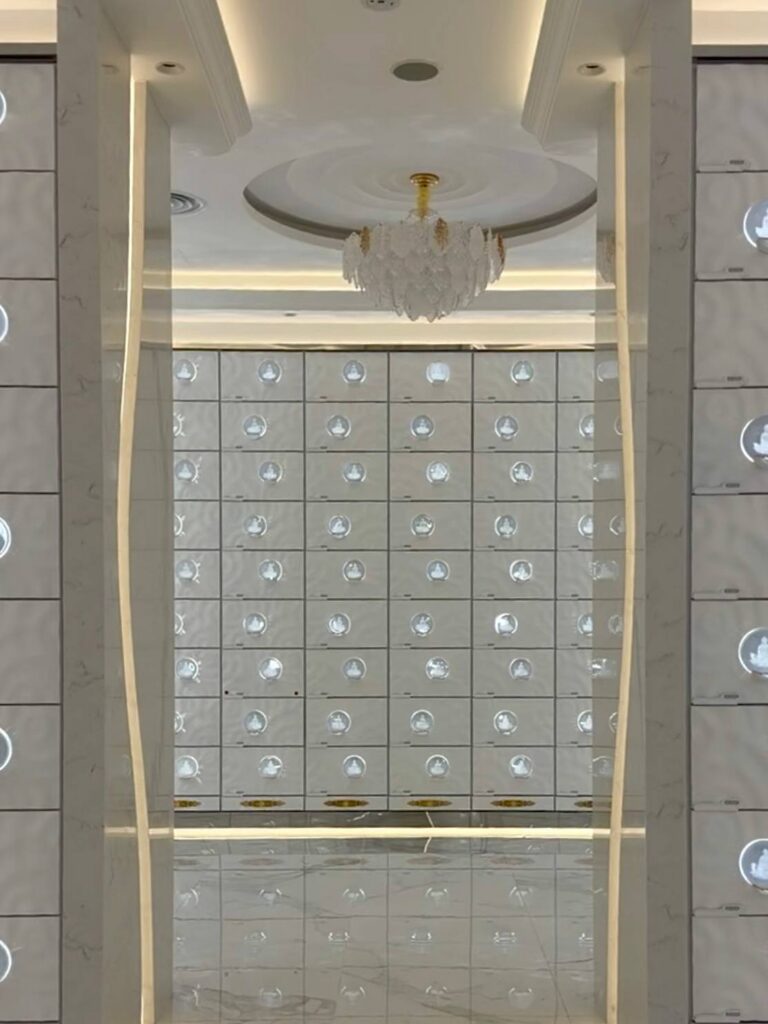
Thian Leng Temple brings together a modern presentation, traditional religious elements, columbarium niches and ancestral-pedestal design. For families considering an eastern Singapore temple environment, that gives the viewing a clear purpose: understand the actual memorial setting, then decide whether its niche or pedestal arrangement fits the family’s remembrance. The place should be experienced in its own right, rather than treated as a generic temple option.
Thian Leng Temple brings religious surroundings into the niche decision
Thian Leng offers a temple setting for the family’s niche or ancestral-pedestal discussion. If the religious context matters to your decision, explore the actual room and the intended observance with the relevant representative. The imagery, atmosphere and service arrangement are more useful to understand together than a broad label applied to every feature of the place.
For an older relative, a temple environment may feel familiar even when the building’s presentation is modern. For a younger family member, it may offer a place to understand an existing family practice. Those are possible personal connections, not a promise that every visitor will feel the same way.
Thian Leng’s modern design brings traditional elements into the viewing
At Thian Leng, contemporary interior design sits alongside traditional religious elements. During the viewing, ask each generation what it notices in that combination. An older relative may value familiar imagery; a younger relative may respond to the presentation of the memorial space. Hearing those different responses helps the family decide whether the room feels suitable beyond the first impression.
A temple niche remains a specific space for an urn
The wider setting does not replace the need for a suitable compartment. If there is already an urn, provide its complete external measurements and shape. Ask how it fits the actual proposed space and opening. A general description such as single or double does not establish compatibility with every container.
For a future arrangement, explain who is intended to use the niche and whether placements may happen at different times. The adviser should connect the explanation to the particular offer. A family should not have to infer later-use arrangements simply because it likes the temple environment.
Thian Leng’s ancestral-pedestal design is a separate remembrance choice
Thian Leng’s ancestral-pedestal offering serves a different purpose from its urn niches. The pedestal supports a family remembrance practice, while the niche is the compartment for cremated remains. Consider the pedestal design in relation to the traditions the family wishes to continue, so it becomes a relevant remembrance choice rather than an automatic addition to the niche discussion.
Some families may wish to discuss both elements. Others may need only a niche or only an ancestral remembrance arrangement. Begin with the purpose: whom the family wants to remember, what practice it wishes to continue and who expects to visit. The service should follow that intention.
Clarify names and family customs for Thian Leng’s pedestal discussion
If a pedestal is relevant, ask how names and wording are prepared and approved for the proposed arrangement. Customs can vary between families, dialect traditions and religious advisers. A sample can explain the presentation, but it cannot determine the correct wording for every household.
When considering ancestral-tablet arrangements at Thian Leng, explain any existing family arrangement before discussing a change. The relevant names, current practice and reason for choosing a new pedestal should be clear to the adviser and the relatives involved. That gives the discussion a purpose beyond the fact that a pedestal is offered alongside niches.
Our guide to suites and niche lots explains the distinction between a room’s setting and the intended urn configuration. Use it to prepare a focused discussion without assuming every listed format is offered at Thian Leng.
Read Thian Leng’s freehold description alongside maintenance terms
Thian Leng’s advertised niche arrangement pairs a freehold description with an initial maintenance payment and another payment after thirty years of use. Ask for the current written terms for the specific niche, including how that maintenance provision applies. The family can then understand the long-term description alongside the services and payments actually being agreed, instead of treating one word as the complete arrangement.
Ask what is included for the specific niche, how maintenance is described and what the later provision means. The written arrangement should explain the family’s rights and obligations in terms it understands. A property description and a service commitment are related information, but one does not replace the other.
If several relatives are contributing, make sure they are discussing the same scope. One person may hear freehold and assume no future payment of any kind, while another has read the maintenance provision. Resolve that difference before deciding how the arrangement will be shared financially.
This is also the point to distinguish the niche from optional remembrance services. A chosen prayer arrangement, a particular memorial design or later alteration may need a separate explanation. Do not infer that every possible service is included because the underlying niche arrangement has a long-term description.
A Kembangan-area viewing should reflect your family’s ordinary journey
An eastern Singapore setting may suit a family with regular visitors nearby, but the actual journey should guide that judgment. Consider who will come most often and how they travel. Someone who depends on a companion may have different needs from the relative organising the viewing by car.
The National University of Singapore’s places-of-worship project identifies Thian Ling Chong Toh Tong Temple at 472 Changi Road. Names may appear with different English spellings in historical material. Confirm the current venue details and viewing arrangements with the service team when planning your visit.
Use the route to the actual shortlisted room, not just the trip to the address. An older relative may care about the distance from arrival to the niche, a place to pause or the view of the memorial. Essential access needs should be explained in advance and checked directly rather than assumed from the location.
A preliminary visit by one relative can help gather questions, but the regular visitor’s own response remains important where they can attend. The purpose is to choose a place they can use comfortably, not merely one the rest of the family considers convenient.
Nirvana’s management role connects the temple setting to service guidance
Nirvana’s management role in Thian Leng’s memorial offering connects the temple setting with the practical support behind a niche or pedestal arrangement. For the family, that means discussing the selected space, maintenance responsibilities and relevant services together. Keep the conversation specific to the proposed memorial, so the religious atmosphere and the service explanation support the same understood choice.
A family arranging an urn placement may need a clear explanation of the compartment, memorial face and timing. A family exploring ancestral remembrance may need help distinguishing the pedestal’s purpose and wording. Someone planning ahead may want to understand how the arrangement will be used later. These are different conversations, and a service-led explanation can keep them connected without merging them into one unclear promise.
The maintenance provision is part of that practical relationship. A well-presented memorial space matters because relatives return over time, often with different family members accompanying them. Understand what management and maintenance mean in the actual agreement, including any payment provision already mentioned. The service’s value should be assessed through clear responsibilities rather than an undefined expectation that every future request is included.
If a religious observance is important, explain the intention before settling the practical schedule. The relevant team can clarify the appropriate arrangement for the temple. A family should know which element is the niche or pedestal selection and which element is a separately discussed remembrance service.
Questions families often ask before viewing Thian Leng
Families often want to compare Thian Leng with another setting before choosing a niche. These answers keep the temple environment separate from the particular niche or pedestal arrangement the family is considering.
Is Thian Leng the same kind of setting as Nirvana Memorial Garden?
They should be viewed as different places. Nirvana Memorial Garden offers a dedicated memorial-garden environment in western Singapore, with different blocks and suites. Thian Leng offers a temple environment in the Kembangan area. Compare the actual surroundings and current offerings rather than assuming one is a smaller version of the other.
A family may prefer Nirvana’s broader memorial setting and suite range, or it may value a temple connection more strongly. Both preferences are worth exploring. The service discussion should explain which specific niche or pedestal arrangement fits the chosen venue, not transfer every feature from one location to another.
Should we also compare Lin San Temple?
Lin San Temple is another temple option within our wider service discussion, with columbarium niches and ancestral pedestals. It has its own Buddhist setting and location. A comparison can be useful when the family knows it wants temple surroundings but has not settled on a particular place.
Use the same family priorities at both viewings: the regular visitor’s journey, comfort with the room, intended urn arrangement and the actual terms. That keeps the comparison personal and practical. A broad label such as temple does not establish that two venues have identical religious character or services.
Do we need to decide on a niche at the first viewing?
A first viewing can be used to understand the place and ask about a specific offering. If the arrangement is urgent, explain the timing so the adviser can focus on suitable current options. If the family is planning ahead, use the opportunity to clarify preferences before treating them as settled instructions.
With advance planning, Ada, a Nirvana Service Director, can help the family distinguish a wish to use Thian Leng from a particular niche or pedestal arrangement. Explain which decision you want to explore at the first viewing. The practical outcome should be clarity about what is arranged now and what would still need attention later.
Explain Thian Leng’s proposed niche or pedestal to the whole family
Relatives who cannot attend may need more than an attractive image. Explain which part of the temple is being considered, the intended service and the specific niche or pedestal. Use permitted photographs where helpful, while respecting other visitors and personal memorial details.
For a multilingual family, distinguish the terms carefully. A niche, a suite and a pedestal are different elements. Point to the relevant part of the proposal so nobody approves one while imagining another. If a family custom affects the arrangement, involve the person who understands it before the final wording or service is approved.
A calm explanation is particularly valuable when one relative has done most of the initial research. The adviser can help the wider family understand the actual offer rather than leave that relative responsible for interpreting every term. Shared understanding is a better foundation than agreement reached through incomplete summaries.
Decide whether Thian Leng feels like a place your family will use
At the end of the viewing, return to a simple picture of an ordinary future visit. Who comes, how do they arrive and what do they do once they reach the memorial? A suitable temple setting should support that visit in a way the family finds natural and meaningful.
Then connect the feeling to the practical arrangement. The niche must suit the intended urn, the pedestal must suit the family’s remembrance purpose and the terms must be understood. A positive response to the room is valuable, but it should be supported by a clear explanation of what is actually being selected.
Thian Leng’s combination of temple surroundings and modern presentation gives families a distinct option to explore. Choose it because that real setting fits your family’s wishes and visits, with the service details explained carefully enough for everyone involved to understand.