
“Who looks after it when we are not there?” is a sensible question about an ancestral tablet. So is “Can we visit when we need to?” A dedicated memorial setting can give a family a shared place beyond one person’s home, but ancestral tablet maintenance and visiting access should be understood through the actual arrangement. Separate care of the hall, care of the individual display and the family’s own offerings or prayers.
Our ancestral tablet service can be discussed alongside the settings at Lin San Temple, Thian Leng Temple and Nirvana Memorial Garden. These are useful options for families seeking a dedicated place of remembrance. The practical details below help turn a reassuring impression into an understandable plan.
What does ancestral tablet maintenance actually cover?
Maintenance can describe several different tasks. Keeping shared floors and common areas tidy is one matter. Looking after an individual display, handling a damaged inscription or arranging a change to names is another. A family should be able to identify which of these belongs to the particular service it is considering.
Begin with the actual arrangement rather than a broad phrase such as “everything is taken care of.” Ask for the relevant explanation of routine care and any limits. This is especially important if relatives are comparing a temple pedestal with a previous home altar, because the daily tasks they remember from home may not transfer directly to a shared memorial hall.
The benefit of a dedicated setting is that remembrance does not have to depend on maintaining an altar inside one household. Relatives gain a common place to visit. To make that benefit practical, they still need to understand their own role and the scope of the service rather than assume the arrangement includes every possible task.
Shared hall care and individual tablet work are different services
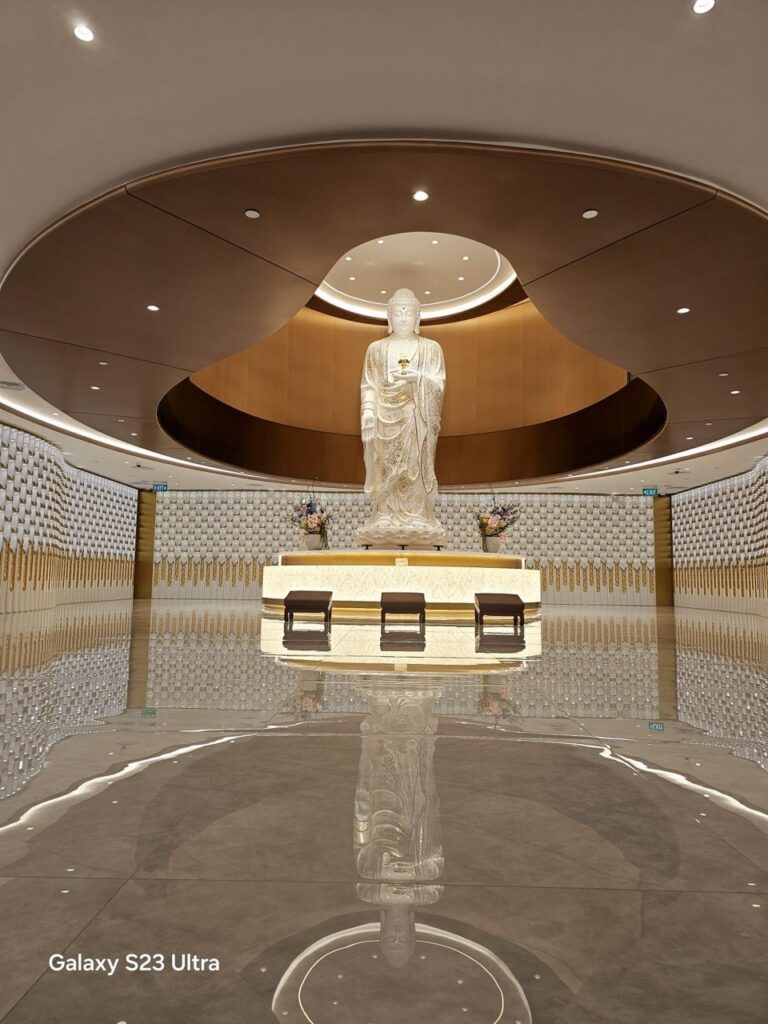
During a viewing, notice the setting and discuss how it is managed. Thian Leng Temple is managed by Nirvana and has a modern pedestal environment. Families can discuss the care of the pedestal within that setting. The specific agreement should explain what applies to the family’s chosen arrangement and how a concern is raised.
Changes to an inscription, replacement work or other individual requests may follow a separate process. Establish that process before it becomes urgent. A family should know whom to approach and what information identifies the arrangement, without assuming that every requested change is routine maintenance.
Can family members visit the ancestral pedestal independently?
Independent visits can be one of the reasons to choose a memorial pedestal outside the home. Several households may then share a destination without relying on one relative to host everyone. The current hall hours, appointment procedures and any restrictions should be obtained directly for the chosen venue.
Do not assume that an open entrance means every memorial area is available. A temple, a memorial hall and a separately arranged prayer service may have different practical arrangements. Keep the relevant visiting information with the family record, together with a way to obtain current information when circumstances change.
For relatives who visit only occasionally, explain how to find the actual pedestal area. A venue name and an attractive photograph are not always enough. The confirmed arrangement identification and a clear route help someone return without depending entirely on the person who attended the first appointment.
Ordinary pedestal visits and booked prayers need separate plans
A quiet visit to remember a loved one is different from attending an organised religious observance. Our prayer services include private prayer arrangements and occasions such as Qing Ming, Vesak Day and Double Ninth. Families can explore these where appropriate to their beliefs and intended remembrance.
The presence of those services does not mean every prayer is included with tablet placement or available without an appointment. Understand the relevant format, venue and booking before inviting relatives. Clear information makes it easier for someone who is unfamiliar with the practice to attend respectfully.
What happens to flowers, food or other offerings at the tablet?
Offerings belong within the venue’s permitted practice. A family accustomed to a home altar may be used to leaving items in place, while a shared hall has to remain suitable for other visitors as well. Learn where offerings may be placed, what should be removed and whether particular items are unsuitable.
The answer should come from the current rules for the actual venue. Do not copy the practice from another temple or from a government columbarium. A dedicated memorial setting can support meaningful visits precisely because everyone respects its shared space and the relevant arrangements.
The NEA’s 2026 visiting advisory provides useful general background about keeping government-managed memorial facilities safe and clean. Its arrangements apply to those facilities. For our temple and memorial options, obtain the current venue-specific guidance rather than importing that advisory as a private hall’s rulebook.
If the family wants an offering that carries particular meaning, explain that during the service discussion. It may be possible to consider an appropriate way to express the intention, subject to the venue’s rules and religious guidance. Bring the question before the visit rather than arrive with items that cannot be used.
Incense and flames belong only where the venue permits them
Do not light incense or candles beside a pedestal simply because that was customary at home. Ask where the permitted practice takes place and how it is organised. Keep children and belongings away from any active burning area, and follow the instructions in place during the visit.
If some relatives prefer a visit without incense, discuss a respectful form of participation appropriate to the setting. A family can share remembrance while individual actions differ. The important point is to understand the venue’s practice and explain the plan before the group gathers.
Who should the family approach if the tablet display needs attention?
Keep the relevant contact route with the arrangement details. If a problem arises, describe it specifically and provide the information needed to identify the actual pedestal. A clear account is easier to act on than a message saying only that something in the hall looks different.
Where photographs are useful and permitted, avoid capturing other families’ inscriptions. State what was observed and when the family visited. Do not alter a shared display or remove an item without the appropriate guidance. A request for attention should follow the arrangement’s actual process.
We provide courteous, respectful information and address family concerns as part of our service commitment. That gives the family a clear basis for raising a question. It does not require presenting an uncertain observation as a confirmed fault or assuming an individual request has already been approved.
If the concern involves wording on the tablet, compare it with the family’s retained approval record. Distinguish a question about what was agreed from a request for a new change. The relevant contact can then explain the appropriate next step for that particular situation.
How should an overseas family organise tablet upkeep and access?
A family living abroad may value a dedicated pedestal because it provides a shared Singapore destination outside a private home. The practical plan should explain the care arrangement, the local point of contact and how returning relatives obtain current visiting information.
Choose a family coordinator who is willing to keep the record current, and explain who can help when they are unavailable. This need not mean assigning every visit to a single local relative. Responsibilities can be shared according to what people can genuinely do: maintaining records, accompanying an older parent or joining a planned family occasion.
Before a return trip, obtain the current venue information and make any relevant prayer appointment separately. A flight booking does not establish availability for a ceremony. Leave space for the family to visit at a manageable pace, especially if several generations are attending together.
After the trip, keep the confirmed information rather than an assortment of old screenshots. Future visitors need the actual location and current contact route. Protect personal information and avoid making the arrangement dependent on access to one person’s private telephone or message history.
How can tablet care stay clear when a family’s circumstances change?
The first agreement may be made by an adult child who is available and confident handling arrangements. Several years later, that person may live overseas or need another sibling to help. The useful preparation is to make the service understandable now. A second relative should know where the agreement is kept and which contact route relates to the selected pedestal.
A change of contact does not necessarily change every part of the arrangement. Find out which updates are administrative and which requests require a separate authorisation. For example, changing a telephone number is a different matter from requesting new wording on a tablet. Keeping those subjects distinct makes a later conversation more precise.
Families sometimes connect a worry about care with guilt about infrequent visits. Separate the two. The care scope is something to understand through the arrangement. The visiting pattern is a family and religious conversation. Knowing the first does not mean relatives have to make unrealistic promises about the second. A practical plan can acknowledge work, travel and the needs of older family members.
If several relatives visit independently, encourage them to pass on relevant observations through the nominated family contact. That avoids sending several versions of the same concern to different people. It also helps distinguish an actual issue from a difference in what each visitor expected to see. Keep the account factual and allow the relevant contact to explain the situation.
After a large family occasion, make sure everyone understands what was arranged for that day only. A private prayer appointment, a permitted offering or help discussed for a particular visit should not become an assumed permanent service without explanation. Retain the confirmation if it affects later plans, and obtain fresh information when a new occasion is being organised.
The value of a dedicated memorial setting includes having a place the family can return to through those changes. The surroundings, the memorial display and the service discussion work together when relatives know their responsibilities. Clarity makes the arrangement easier to pass on without asking the next person to begin again from uncertainty.
Which tablet care details should be kept with the agreement?
Retain the written arrangement and the practical explanations that affect ongoing use. A family should understand any maintenance obligations, separate service charges and procedures for changing contact details. Marketing language about a setting does not replace the terms that govern the actual arrangement.
The record can remain concise. Its purpose is to help a relative answer ordinary questions without reconstructing the original conversation. Keep confirmed details distinct from questions awaiting a response. Where information changes, identify the current version clearly.
| Care or access detail | Why the family needs it later |
|---|---|
| Actual pedestal identification | Helps relatives locate the right arrangement and raise a specific question. |
| Routine care scope | Explains which tasks belong to the service and which remain with the family. |
| Current visiting information | Helps an independent visitor prepare without relying on old assumptions. |
| Offerings and prayer arrangements | Separates an ordinary visit from a religious service or restricted activity. |
| Contact-update procedure | Keeps the arrangement connected with the responsible family members. |
When comparing venues, use this record to understand the actual differences rather than force every setting into the same description. Lin San Temple’s Buddhist environment, Thian Leng Temple’s modern pedestal design and Nirvana Memorial Garden’s landscaped surroundings offer different reasons for a family to visit. Care and access still belong to the particular arrangement selected.
Choose with a future ordinary visit in mind. The family should know where to go, what it can do and how to obtain help if something is unclear. A well-understood ancestral tablet arrangement combines a meaningful memorial setting with practical information that relatives can continue to use after the first viewing is over.