
Some families want a place for prayer. Others picture a quiet visit with a few flowers, a conversation between siblings or a short pause beside a familiar photograph. Before choosing a niche setting, describe the remembrance you expect to practise. The room should support that experience, rather than asking the family to fit a routine it never intended.
Our columbarium options include different suite settings and venue choices. Nirvana Memorial Garden, Lin San Temple and Thian Leng Temple bring different surroundings to the decision. Within the wider range, religious, free-thinker and combination suites offer further distinctions. Those choices are most useful when connected to the way your own family wants to remember.
A columbarium setting should suit the way you want to spend a visit
Begin with a scene that feels realistic. A surviving partner may want to sit quietly after finding the niche. Siblings may prefer to gather on a significant date. A younger relative may want a place where they can learn the family connection without being expected to know every religious custom. Each scene suggests a different priority.
The family does not have to choose only one style of remembrance. The point is to identify what matters most and what the venue permits. A setting can be religiously meaningful and still accommodate quiet personal reflection. A less religious room can still hold a deeply personal family connection. Discuss the actual surroundings and arrangements rather than assuming a label defines every possible visit.
A quiet niche visit should feel comfortable without a ceremony
During a viewing, give yourself a moment without a continuous explanation. Look at the intended niche position and the surrounding imagery. Imagine arriving on an ordinary day without a ceremony. Would you feel comfortable pausing there? A room’s emotional fit can be easier to understand in that small moment than in a list of decorative features.
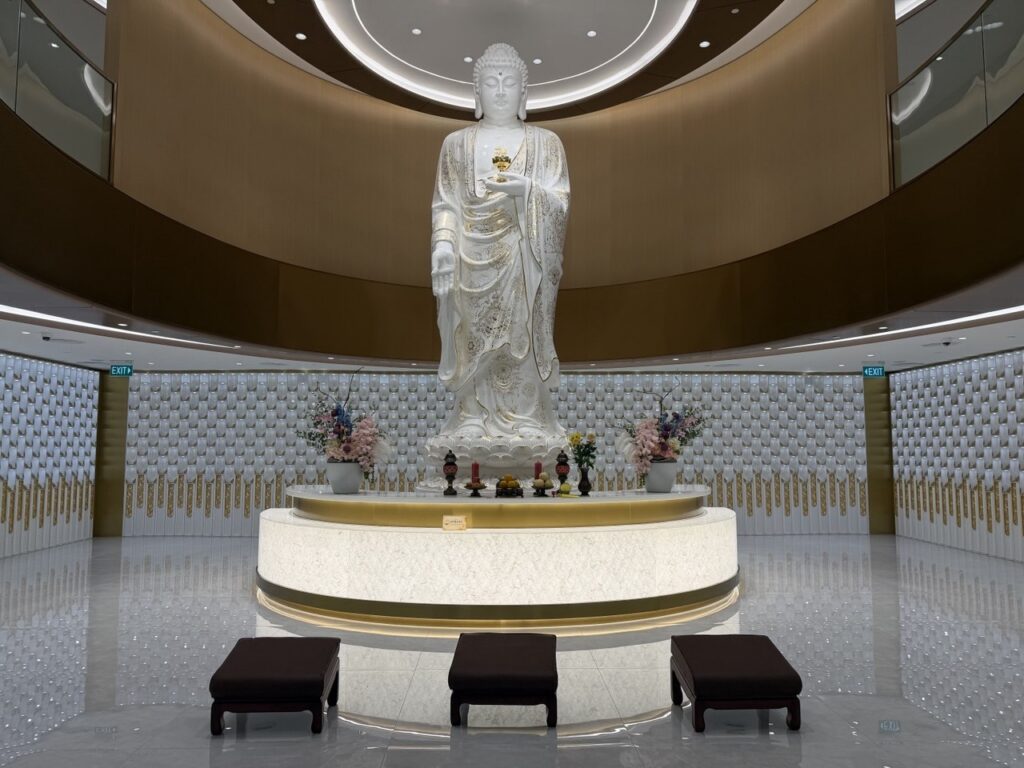
For someone who wants an unhurried personal visit, Nirvana’s traditional and modern architecture and greenery provide a dedicated destination before the family reaches the suite. In the shortlisted air-conditioned hall, imagine the ordinary quiet pause you came to assess. The relevant family lounge may help around that visit, but the room itself should feel comfortable when no ceremony is taking place.
A prayer-led visit needs more than religious decoration
For a family whose visits centre on Buddhist or traditional Chinese remembrance, the figures and motifs in religious columbarium suites may provide a familiar backdrop. The next question is how the intended prayer is arranged. Explain whether you picture a short family observance or a separately led service, so the actual visit—not the presence of a religious image—guides the discussion.
Discuss the intended prayer service as part of planning that visit: where it would take place, who would lead it and what the family should prepare. The religious room provides the surroundings, while the agreed service gives the observance its practical shape. Establish those details for the particular venue before inviting relatives to attend.
Religious and free-thinker niche settings create different surroundings
The distinction includes the surroundings relatives will enter. A religious suite may use figures, sutras or traditional motifs; free-thinker rooms use less specific religious imagery, including floral themes. View the actual room with your usual remembrance routine in mind. A family wanting quiet conversation may respond differently from a family whose visits centre on prayer.
For some families, a religious setting makes remembrance feel familiar and connected to longstanding practice. For others, a less specific room creates a comfortable shared place for relatives with different beliefs. Neither setting determines how much the family cares. The useful choice is the environment they can return to naturally.
A mixed-belief family should discuss comfort before personalisation
Begin with the room itself. A personal niche face may express an individual’s identity, but it does not remove the surrounding suite’s character. If one relative feels uncomfortable with that character, discuss the concern before assuming a small change to the memorial face will solve it.
Ask each regular visitor what they would be comfortable attending and what they would prefer not to participate in. Someone may be happy to stand quietly during a prayer without taking part. Someone else may prefer a different setting entirely. Those answers can help identify a room that supports a shared visit without requiring identical beliefs.
The known wishes of the person being remembered should also guide the conversation. A family’s current preference is important, but it should not silently replace an expressed religious or non-religious wish. Where there is uncertainty, take time to clarify the intention rather than selecting a room because it is the first attractive option shown.
A temple environment may connect several parts of family remembrance
Lin San Temple brings niches and ancestral pedestals into a Buddhist temple setting. For a family that values temple surroundings, that relationship can be meaningful. A visit may feel connected to a familiar practice of prayer rather than only to the individual compartment.
If the family’s usual remembrance centres on temple visits, include Thian Leng Temple in the comparison. Its Kembangan-area setting combines traditional religious elements with modern presentation. At the viewing, explain the actual visit you hope to continue—quiet remembrance, an agreed prayer arrangement or ancestral-pedestal visits—so the adviser can distinguish the relevant service from the general appeal of temple surroundings.
Temple settings may be especially relevant when a family is considering both urn placement and ancestral remembrance. Still, the services have different purposes. A niche houses cremated remains, while an ancestral pedestal supports a different remembrance arrangement. The family should understand each element and choose what matches its own practice.
Singapore’s National Heritage Board account of Qing Ming recognises remembrance visits to columbaria and temples housing ancestral tablets. It offers cultural context, not a rule that every family must follow one observance. Your family’s practice and the venue’s arrangements should guide the actual visit.
Combination suites can bring related remembrance arrangements closer
Combination rooms bring niches and ancestral pedestals into the same setting. For a family whose regular visit includes both, that proximity can make the occasion easier to follow: relatives can understand which person or generation each arrangement concerns without treating them as unrelated destinations. The benefit belongs to a practice the family already values, so explain how you expect to use both before comparing the proposed positions.
The practical benefit depends on what is actually offered. Discuss the particular niche and pedestal positions and their respective services. A general description of a combination room does not establish that the family can select any two nearby places or that every part of its preferred observance is included.
A household that normally makes only a short visit to an urn niche may find that a niche alone already supports its routine. A household continuing an ancestral-pedestal practice has a different reason to explore a combination room: understanding whether the two relevant places can form one workable visit. Describe that practice first, then consider the particular positions and services offered.
A family gathering needs a different conversation from a short visit
Several people arriving together create practical questions about shared space and the intended observance. A family should discuss its likely gathering with the relevant team rather than assuming a room can be used as a private event space. The aim is to support remembrance while respecting other families using the venue.
Think about who is attending. An older person may need a shorter visit or a place to rest. Children may need a simple explanation of what is happening. A relative who does not share the ritual may prefer to be present quietly. Explaining those needs early gives the service conversation a useful shape.
For a family that usually visits in smaller groups, the room’s everyday usability may matter more than the largest gathering. Digital directories and clear location references can help less frequent visitors find the right place. The family can value those practical comforts alongside the room’s religious and visual character.
Personal details should make the niche recognisable, not overloaded
A name, photograph or permitted symbol can help a niche feel personal within its wider setting. Discuss the actual memorial design offered and review a complete proof. The presentation should be recognisable from the normal visiting position, with wording the family has checked carefully.
When several relatives contribute ideas, distinguish what belongs on the face from what can be remembered in other ways. A niche does not need to carry every family story or every religious phrase someone suggests. A clear name and meaningful image can be enough, leaving longer memories for conversation, albums or private keepsakes.
For a couple or larger family arrangement, consider how each person is represented and how later additions are handled. The surrounding setting may stay the same while personal details are added at different times. Understanding that distinction helps a family choose a room it will remain comfortable with beyond the first placement.
Which columbarium comforts suit your regular remembrance visits?
A viewing can introduce many attractive features, but the most useful ones are those connected to your own visits. Air-conditioned halls may matter to a family who wants time indoors. A clear directory may help a relative who comes infrequently. A temple atmosphere may be central for someone who values prayer in a religious setting.
Give each feature a practical meaning. Instead of asking whether a room feels impressive, ask what a normal visit there would involve. Instead of assuming a larger setting is better, ask whether it serves the intended people and urn arrangement. This keeps the service choice connected to the family rather than to the length of a feature list.
Ada’s advance-planning guidance can help connect the setting discussion to the actual arrangement. Explain whether the decision concerns an immediate urn placement, a couple’s future plan or a broader family intention. The same venue can be approached through different needs, and the advice is more useful when those needs are clear.
Help younger relatives connect a niche visit with family memories
A younger family member may know the person through stories rather than memories. A recognisable photograph, a clearly explained name and a setting where relatives feel comfortable talking can give that visitor a starting point. The family does not have to make the visit complicated for it to carry meaning.
If a prayer or traditional observance is planned, explain it in plain language beforehand. A child or teenager should not be expected to know a custom simply because older relatives grew up with it. Where the family has different beliefs, a simple explanation can also help someone understand how to be present respectfully without feeling pressed into participation.
The chosen room should allow the family to make that introduction naturally within the venue’s arrangements. Ancestral remembrance can continue through conversation as well as formal observance, with each generation understanding whom it has come to remember.
Choose a columbarium setting that supports your remembrance routine
Before deciding, return to the scene you imagined at the beginning. Picture the people who will come, the time they want to spend and the way they prefer to remember. Does the shortlisted setting support that visit? If a feature is important, make sure it belongs to the actual room or service being selected.
It is reasonable for the family to prefer different settings before a viewing. The aim is not to make everyone react identically. It is to find a place that respects the deceased’s wishes and gives the regular visitors a comfortable way to remain connected. That may involve a religious suite, a less specific environment or a temple arrangement.
Take the choice beyond a photograph. A niche setting becomes meaningful through the visits that follow: a quiet pause, a familiar prayer or relatives remembering together. Choose the place that makes those visits understandable and welcome for your family, with the practical arrangements clearly explained.