
Living overseas does not stop a Singapore family from choosing an ancestral tablet arrangement thoughtfully. It changes how the decision is organised. The most useful plan combines a place relatives can visit in Singapore, a clear record of the family’s wishes and one dependable channel for the actual arrangement. Begin with those three points before choosing a pedestal from a photograph or trying to settle everything during a short flight home.
For overseas families considering ancestral tablet placement in Singapore, our ancestral tablet service sits alongside a choice of memorial environments: Nirvana Memorial Garden, Lin San Temple and Thian Leng Temple. This gives relatives something specific to compare. The arrangement should work for the people in Singapore and the people returning from abroad.
Ancestral tablet placement for overseas families needs a local visiting plan
A family may live across several countries while still seeing Singapore as the place where its shared remembrance belongs. A dedicated pedestal can provide a location independent of any one child’s home. Relatives can then discuss a common destination rather than assume that a household altar must follow whichever family member currently has space.
The practical benefit is strongest when there is a realistic visiting plan. Identify who is likely to visit between the larger family gatherings. That person might be a sibling, an older relative or a cousin who already lives nearby. Ask what they feel comfortable doing. Their willingness matters more than assigning them a responsibility because they happen to be the only person in Singapore.
For a couple returning once a year, the priority may be a calm visit with their children during a short stay. For a parent still living locally, it may be easy access for more frequent remembrance. Both needs belong in the decision. A location chosen only around the annual visitor’s itinerary may overlook the relative who will make most of the journeys.
A Singapore relative can help without becoming the only decision-maker
A local relative can attend a viewing, describe the route and raise questions that are hard to answer from images. Give them a clear brief: which services the family is considering, what information is needed and which decisions are still shared. A viewing does not have to become a commitment simply because one person is physically present.
Afterwards, ask for the actual information received rather than a broad verdict. “The hall felt quiet and these are the proposed terms” is different from “everything is included.” The first description gives the overseas family something to discuss. The second can hide uncertainty about care, ceremonies, inscription or ongoing obligations.
Compare Singapore memorial settings beyond the arrival-day photograph
Nirvana Memorial Garden combines a western Singapore setting with greenery, Chinese cultural influences and Buddhist chanting. That environment may appeal to relatives wanting a dedicated destination away from an individual household. The garden setting is part of the experience to explore, alongside the actual pedestal option and the journey family members would make.
Lin San Temple offers ancestral pedestals within a Buddhist temple setting, together with a niche suite and Mini Buddha displays. A family wanting the atmosphere of a temple can see how those features relate to its own preferences. The exact tablet arrangement still needs to be identified, because a photograph of the wider temple is not a complete description of an individual placement.
Thian Leng Temple offers another setting to discuss, in the Kembangan area, with a modern pedestal design incorporating traditional religious elements. For a family whose relatives live in the east, that location may be worth viewing. Convenience remains personal: compare the real route, current access arrangements and the needs of the relatives who will attend.
Pedestal photographs should show the relevant space
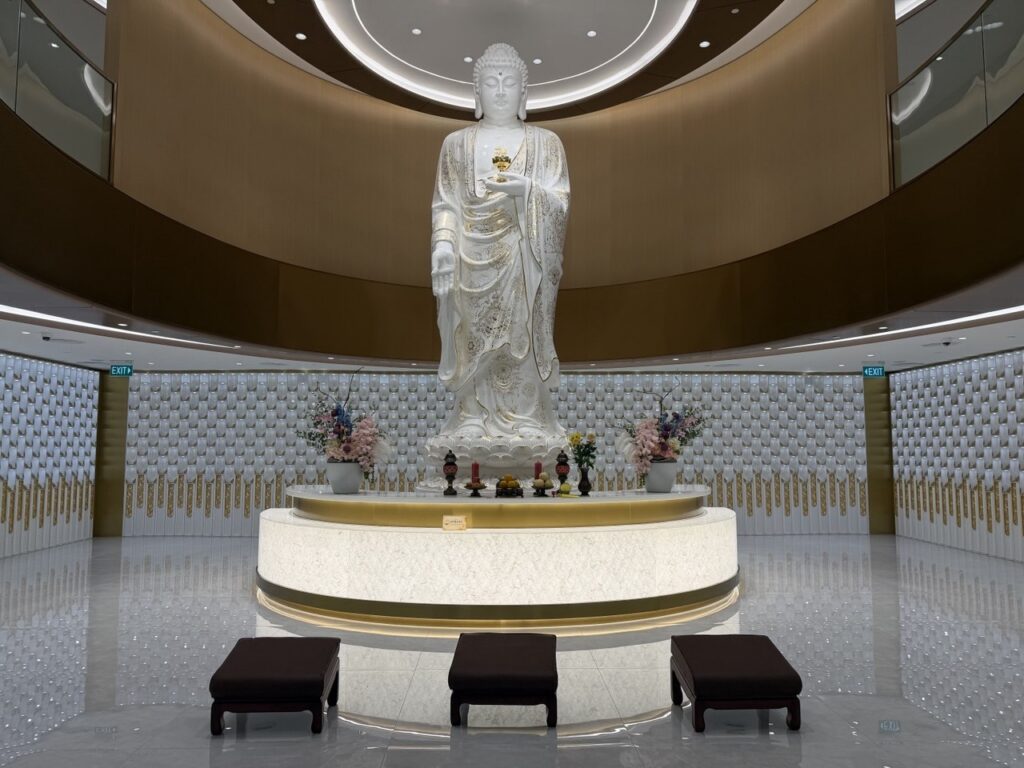
When photographs are permitted, use them to explain a particular option rather than to create a gallery of attractive rooms. Label the venue, the area and what the image shows. Include a wider view that helps relatives understand where they would stand, without capturing private inscriptions belonging to other families.
Keep impressions and confirmed details separate. A family member can describe the light, the approach and the atmosphere they experienced. The agreement, however, should identify the actual arrangement and its terms. This prevents a reassuring picture from being asked to prove something it cannot show, such as ongoing care responsibilities or future administrative procedures.
Use the time before a return flight to settle the tablet brief
A short visit to Singapore becomes more useful when the family has already discussed the basic brief. Decide whose names are to be remembered, which relatives need to participate and which memorial settings are worth viewing. Gather clear name references before the trip, especially when Chinese characters and English spellings are held by different family members.
A service discussion can then focus on the available choices rather than begin with a rushed search through old documents. As part of our service commitment, we provide courteous support and clear information with respect for your family’s preferences. Explain the overseas circumstances plainly: the dates you will be in Singapore, who can attend and what you hope to understand during the visit.
That information helps make the conversation focused. It does not mean every arrangement must be completed before the flight home. Leave room for a second discussion where a name, a term or a religious question remains unresolved. A clear decision taken after the trip is preferable to an unclear approval given at the airport because the itinerary has run out.
Ancestral tablet records should survive a change of time zone
Keep one current record of the proposed arrangement, with the latest names and the questions still open. Identify who sends the agreed instructions. If relatives are answering messages from different time zones, allow enough time for everyone to read the same version before it is treated as approved.
Store the final record where the appropriate relatives can access it without depending on one person’s private message history. Include the venue, the actual arrangement identification and the relevant contact route. Protect personal information, and avoid sending unnecessary identity documents to a large group merely to keep everyone informed.
Separate ongoing remembrance from a promise of constant attendance
An overseas relative may worry that choosing a pedestal commits them to attending every occasion in person. Begin instead with what the family can honestly sustain. A regular local visitor, occasional return visits and carefully chosen family observances can form a practical pattern. The religious suitability of that pattern should be discussed with the relevant adviser.
Families can discuss prayer services for Qing Ming, Vesak Day and Double Ninth with us, as well as private arrangements. These provide specific occasions to discuss if the family wants organised remembrance. They are not a promise that remote participation, recording or attendance on the family’s preferred date is automatically available.
If a relative cannot attend, decide how the family will share the occasion respectfully. A private account of the visit may be enough. Ask permission before taking photographs or recording, and avoid including other visitors or family inscriptions. Do not assume that an overseas video call is permitted in every prayer setting or appropriate during every ceremony.
People can remain involved in different ways. One person may help verify the inscription; another may accompany an older parent; another may share genuine family memories with children. Those contributions support remembrance without pretending that distance has disappeared. The plan should make participation easier, rather than create a standard that relatives cannot meet.
Clarify tablet administration while the family is available
The practical details deserve a calm discussion before the original coordinator returns abroad. Ask how the venue records the main contact, which information should be kept and what process applies to later changes. Where the arrangement requires formal authorisation, follow the venue’s actual requirements. A family message agreeing to help is not a substitute for that procedure.
Read the financial terms as a whole. Establish what the proposed payment covers, whether any services are separate and what ongoing obligations apply. If several relatives are contributing from different countries, keep the family contribution arrangement clear without assuming it changes the venue’s rules. Any quoted payment option should be explained for the specific arrangement being considered.
Ask how to update an address, telephone number or responsible contact after a move. Overseas families may change these details more often than they expect. A clear update procedure helps keep the arrangement connected to the right people. It is more useful than leaving the venue with a number that only works during visits to Singapore.
The government’s guidance on discussing wishes with loved ones is useful background for these family conversations. Share preferences directly and keep an accessible family record. The important point is that relatives know the plan; they should not have to reconstruct it later from fragments held in several countries.
Choose a pedestal setting around the people who remain in Singapore
Consider a family in which the adult children live abroad but their mother remains in Singapore. She may want to continue visiting independently. In that situation, her preferred temple atmosphere and her ordinary journey deserve a central place in the decision. A pedestal that the children find impressive during a holiday may still be less suitable than a setting she feels comfortable returning to.
Now consider a family with no regular local visitor. Their needs are different. A dedicated memorial place can still provide a shared destination when they return, but they should understand the care arrangement and the way future visits are organised. The advantage is a place beyond a private household, with the relevant service information gathered in advance rather than recreated on each visit.
A third family may already have an urn niche in Singapore and want to discuss a tablet for remembrance. Here the key is the relationship between the two locations. A convenient combined visit can be valuable, but the pedestal and niche remain separate services. Ask to understand the actual route and each arrangement rather than assuming that a shared venue name settles the practical details.
These families could all use the phrase “planning from overseas” while needing different support. Tell us which situation is closest to yours. Our range of garden and temple settings makes it possible to discuss the environment as well as the service itself. Clear information about the people, the intended visits and the family’s preferences helps turn that range into a meaningful shortlist.
Give the next Singapore visit one clear purpose
Before travelling, decide whether the next visit is a first viewing, an inscription review or an agreed remembrance occasion. The preparation differs. A first viewing needs room for questions; a review needs the correct records; an occasion needs confirmed venue and ceremony information. Naming the purpose helps relatives understand why they are being asked to attend.
If the family is still choosing, leave time after the viewing to speak privately. An older parent may want to explain a concern away from the group. A sibling who appears quiet may simply need the information in another language. A dedicated discussion gives those views a place before a decision is treated as settled.
Once a pedestal is arranged, send visiting relatives a concise explanation of the location and how to prepare for a visit. Include the current contact route rather than assuming that hours or access procedures will never change. Help the children understand whose names they will see and why the place matters to the family.
Distance makes planning more deliberate, but it does not make a family’s remembrance less meaningful. Choose an ancestral tablet setting that local relatives can use and returning relatives can recognise as their shared place. A clear arrangement, respectful service discussion and realistic visiting pattern can keep that connection practical across the years and across borders.