
The moving date is confirmed, but the family has not decided what happens to the ancestral tablet. Before packing the altar with the rest of the household, separate two questions: will the tablet continue in the new home, or is the move the right time to discuss a dedicated memorial setting? Moving an ancestral tablet in Singapore involves more than finding a safe box. The family needs a shared decision, a clear destination and guidance on any religious observance it wishes to follow.
If you are considering a memorial pedestal, we can help you explore ancestral tablet arrangements at Lin San Temple and Thian Leng Temple before the house move. Make the destination decision before removing the existing arrangement. There is no need to turn a housing deadline into a rushed memorial choice.
Moving an ancestral tablet starts before the removal van arrives
First, find out who has been caring for the tablet and who understands its history. That may be a parent, aunt or uncle rather than the person organising the house move. Ask what the current arrangement represents, whose names it carries and whether the family has any existing documents. Listen before proposing changes: the person who maintains the altar may have concerns that are not visible on the removal checklist.
A family downsizing from a long-held home might discover that the new household cannot accommodate the same altar. That does not mean a temple arrangement has already been agreed. It means there is a genuine choice to discuss. Another family might have ample space in the new property but expect the household carer to spend more time abroad. In that case, the issue is future responsibility rather than floor area.
Allow time for relatives to ask questions before a viewing. A hurried message saying “the tablet has to go somewhere” can sound as though the decision is already made. A clearer message explains the moving date, the available options and what remains open. Invite concerns about religion, visiting distance and future care separately, so they can be answered rather than bundled into one disagreement.
Confirm whose tablet and inscription are being moved
Look carefully at the existing names and inscription, without treating a quick photograph as an official record. Ask a relative who can read the characters to help. If different family records use different spellings, note the difference and resolve it before authorising any new inscription. A move is an inconvenient time to discover that everyone assumed someone else had checked.
Keep useful photographs and records private. They may contain names or other family information that does not belong in a public chat or social post. Share what is needed with the people handling the arrangement through an appropriate channel. The aim is to preserve accuracy, not to circulate every document to everyone involved in the house move.
Choose the tablet’s destination before arranging its journey
The destination determines which questions need answers. Continuing at home calls for a suitable position and a willing carer in the new household. Moving to a memorial pedestal calls for a confirmed arrangement with the receiving venue. Neither decision should rest on the assumption that the existing tablet can simply be placed anywhere in a new hall.
Ask whether the venue can receive the existing physical tablet, whether a new memorial inscription is required, and what religious guidance is available for that particular transition. These are questions to confirm, not services that every arrangement automatically includes. If a new tablet or inscription is involved, establish what the family should do with the previous object before anything is removed.
A new home altar needs more than an empty corner
If the tablet is staying at home, discuss the proposed position with the person who will live with it. Consider the daily use of the room, safe movement around furniture and the family’s actual practices. For a family wanting religious guidance, arrange that discussion before carpentry or built-in furniture fixes the available space.
Our existing guide to ancestral tablets at home can help introduce that conversation. It should not replace advice on the particular family altar or be treated as a universal instruction for moving every tablet. Ask the relevant religious adviser which parts of the family’s current practice need to be considered during the move.
A memorial pedestal needs a confirmed receiving arrangement
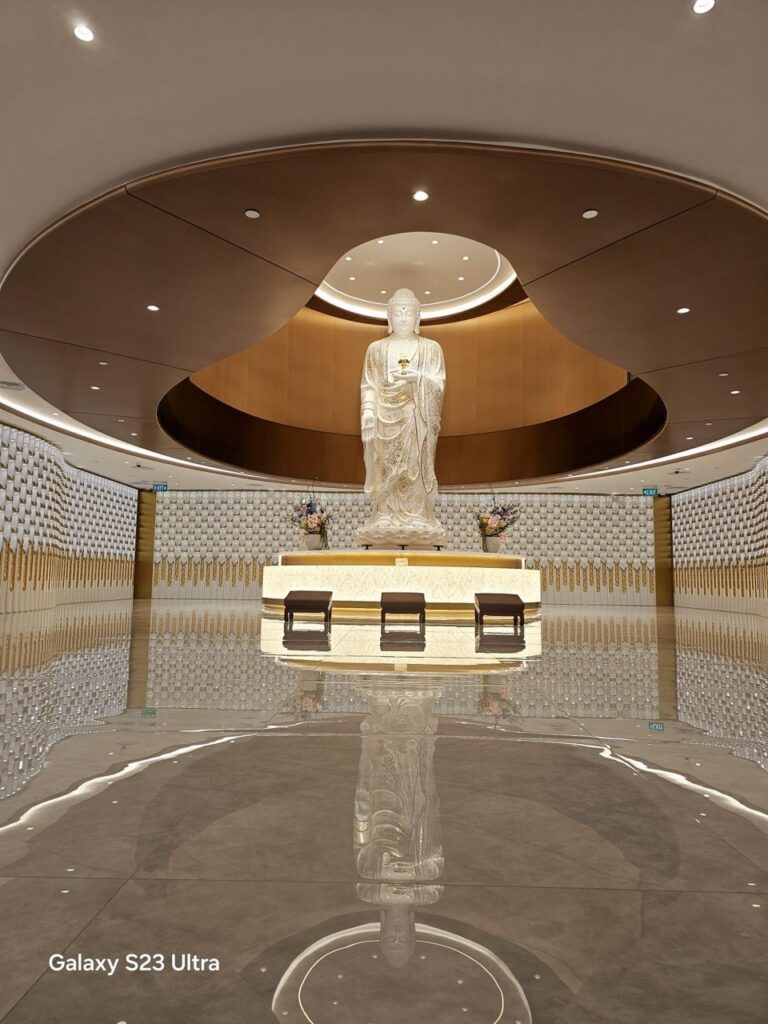
For placement outside the home, view the actual pedestal setting rather than selecting solely from a general photograph. Lin San Temple has ancestral pedestal displays in a Buddhist environment, while Thian Leng Temple combines a modern pedestal design with traditional religious elements. Ask which arrangement is available, what it accommodates and what the written terms cover.
A viewing is also the time to ask about the practical sequence. Who receives the family? Which information must be checked first? Does a ceremony require a separate appointment? What happens if the moving date changes? A clear sequence lets the family organise transport and attendance without assuming that the ordinary house-moving team should handle a religious object.
Keep the house move and the religious observance on separate schedules
Household removals are driven by keys, contractors and delivery slots. A family’s religious observance may involve different people and a different timetable. Avoid asking the removal company to improvise because the two schedules have become tangled. Decide who is coordinating the tablet arrangement and make sure that person knows when the home must be vacated.
If the family wants a religiously chosen date or a specific rite, discuss that early with the appropriate adviser. Do not rely on a date suggested casually by someone unfamiliar with the family’s practice. Equally, do not let an online description imply that every move requires exactly the same ceremony. Ask what applies to this arrangement and why.
Our prayer services include private prayer arrangements as well as named festival occasions. We can discuss which private prayer arrangements are appropriate and available for the transition your family is considering. Confirm the venue, participants, materials and any separate fee. A relocation may involve needs beyond a private prayer service, so make sure each part of that transition is understood.
Where a handover cannot happen on the moving day, ask the receiving venue or adviser what interim arrangements are possible. Do not improvise temporary storage based on a generic packing article. The answer may depend on the physical item, the family’s beliefs and the eventual placement. Obtain the answer before the old home becomes inaccessible.
Use one family record for the tablet relocation
A shared record can be short. Its purpose is to prevent one relative relying on an old conversation while another follows a different set of instructions. Record the agreed destination, the main coordinator, the information awaiting confirmation and the appointments that have actually been accepted.
- Existing arrangement: note whose names appear and who has checked them.
- Destination: distinguish the new home from a named memorial venue and specific arrangement.
- Unanswered questions: include acceptance of the existing tablet, inscription and any religious guidance.
- Confirmed dates: keep the house handover separate from venue appointments and ceremonies.
- Family communication: identify who will update relatives if the plan changes.
For a sibling living overseas, send a clear account of what was discussed during the viewing. Mark an estimate as an estimate and a confirmed appointment as confirmed. A photograph of a pedestal does not establish its availability, price or terms. Including that distinction helps the absent relative participate without misunderstanding how far the decision has progressed.
The government’s MyLegacy guidance on talking with loved ones supports the broader value of discussing wishes rather than leaving others to guess. A tablet relocation is one opportunity to have that conversation. The practical record remains the family’s own; it should be kept somewhere the relevant relatives can reliably access.
Check the receiving venue through the lens of future visits
A home move can make everyone focus on the immediate deadline. The pedestal, however, may become a regular destination long after the boxes are unpacked. Consider how family members will travel from their new homes, where older relatives will pause, and how visits will work when the original coordinator is unavailable.
If the family is also considering Nirvana Memorial Garden, its western Singapore setting and landscaped environment offer a different visit to the temple settings. The value of comparing venues is that relatives can see which environment and journey fit their lives. Avoid assuming one location is easier for everyone simply because it is convenient for the person arranging the move.
Ask to see the actual area associated with the proposed pedestal. Confirm current visiting hours and any appointment arrangements directly. Take notes on the route from arrival to the memorial area, especially if someone uses a walking aid. Descriptions such as “modern” or “peaceful” help convey the setting, but they do not replace checking a particular family’s access needs.
Also ask how the venue keeps family contact information current. The person moving house may change address and telephone number at the same time. Make sure the arrangement does not remain tied only to an old address or a relative who is no longer managing it. Confirm what evidence or process is needed to update the record.
Check the pedestal details once the family has chosen
After a venue discussion, read the proposed inscription against the original record rather than against a relative’s recollection. Ask who supplies the final layout and who authorises it. If the family uses both Chinese and English names, identify the exact versions to be checked. This is an accuracy task, not something to complete hurriedly while answering a contractor’s call.
Establish whether the appointment being arranged is a viewing, an administrative meeting or the actual placement. Those can be different occasions. A relative invited to “meet at the temple” may assume the move is happening that day, while the coordinator intends only to discuss options. Naming the purpose of each visit avoids unnecessary alarm and makes attendance easier to organise.
Before the final handover, ask the receiving contact to repeat the agreed sequence and identify anything still outstanding. The family may need to confirm an inscription, bring a relevant record or finalise a ceremony discussion. Follow the actual instructions given for the arrangement, and keep a copy of the written confirmation with the family coordinator.
Afterwards, tell relatives what has been completed and what remains to be done. Share the confirmed location and the proper visiting information privately. If a prayer appointment is later than the physical handover, say so clearly. Completing a house move does not have to mean every aspect of family remembrance happens on the same day.
Avoid solving the housing deadline with an unclear memorial agreement
Before committing to placement, read the arrangement as carefully as you would if there were no house move. Ask what the payment covers, whether there are separate ongoing obligations and how future changes are handled. If a term about tenure sounds reassuring but its practical meaning is unclear, ask for the relevant explanation in writing.
Keep tablet placement separate from any discussion of a niche for ashes. A family may want to coordinate both, but the tablet and urn serve different purposes. Moving one does not automatically require moving the other. If someone proposes a combined arrangement, ask for each element to be identified individually so the family knows what has been chosen.
Once the plan is settled, confirm the last practical details with the people actually involved. Let the household removal team know that the tablet arrangement has its own coordinator. Tell the attending relatives where and when they are needed. Keep any confirmed instructions with the family record, rather than buried in a long conversation about furniture deliveries.
The house will have its own moving day. Give the ancestral tablet an equally clear destination and a carefully discussed transition. When relatives know what is moving, why the setting was chosen and how remembrance will continue, the family can leave the old home without leaving these questions unresolved.