
One sibling is flying home as another arrives in Singapore. The funeral discussion has moved quickly, and most of the information is still on the first person’s phone. Organising funeral documents for travelling family in Singapore means making the confirmed plan understandable to the next appropriate contact, without confusing a family summary with an official document or authorisation.
Begin with three separate things: the current funeral arrangement, the records supporting it and the person responsible for each unanswered question. Our immediate funeral support can assist with the service conversation, including an existing preplanned arrangement. Tell the coordinator when the family’s practical contact is changing, and ask what needs to be confirmed for that change.
The travelling relative needs a current funeral plan, not the whole message history
A long message thread may contain every discussion but still fail to show what is confirmed. Before handing it over, prepare a concise account of the current arrangement. Identify the relevant provider contact, the agreed service and any question still awaiting an answer.
Keep provisional information visibly provisional. If the family has discussed a niche viewing but not selected a niche, say so. If a service change has been requested but not confirmed, record that status. The arriving relative should not have to infer the plan from the order in which messages were sent.
A funeral contact handoff should identify who is communicating next
Tell the service coordinator which person will receive routine updates and how they can be reached. Ask whether any additional confirmation is needed for the intended role. A practical communication change does not automatically transfer contractual or legal authority.
The departing relative should explain which matters they have been handling and which belong to someone else. A person who has only been collecting information may not be the applicant or the person authorised to approve a service change. Preserve that distinction in the family note.
Where possible, let the outgoing and incoming contacts review the same summary together. This gives the new contact a chance to ask why a choice was made and what remains open. It is easier to correct a misunderstanding while the original conversation is still fresh.
Official funeral documents and family summaries have different jobs
A family note helps relatives understand the situation. An official certificate, permit or application record has a different purpose. Do not rewrite essential details into a message and assume that the message can replace the source document where the receiving authority requires it.
ICA’s digital death certificate guidance explains the current registration and retrieval process, including eligibility. The family should follow that source rather than rely on an old instruction or assume every relative can obtain the certificate in the same way.
Digital death certificate access should be checked before travel
If the person leaving Singapore has been handling the relevant records, establish how the appropriate family member will access what is needed next. Ask the receiving authority or provider which document is required and how it should be supplied. Do not assume that a screenshot will be sufficient.
Keep identity details accurate. A name or document reference copied into a family note should be checked against the source. If there is a discrepancy, raise it with the responsible organisation rather than correct an official record informally or choose the spelling that seems most familiar.
The arriving relative does not need unrestricted access to every private record simply to receive service updates. Share information according to the role and the actual need. This keeps the handoff useful without turning the whole family group into a document archive.
Permit and booking status should remain separate in the funeral record
NEA’s arrangement guidance explains the permit and booking context for burial or cremation. Ask the appropriate contact to confirm the actual status. A note that a document has been obtained should not be interpreted as proof that every booking is complete.
Record the organisation responsible for an unanswered official question. The service coordinator may be assisting, while an authority determines the application requirement. The incoming relative should know where to ask rather than repeat a general enquiry to several people.
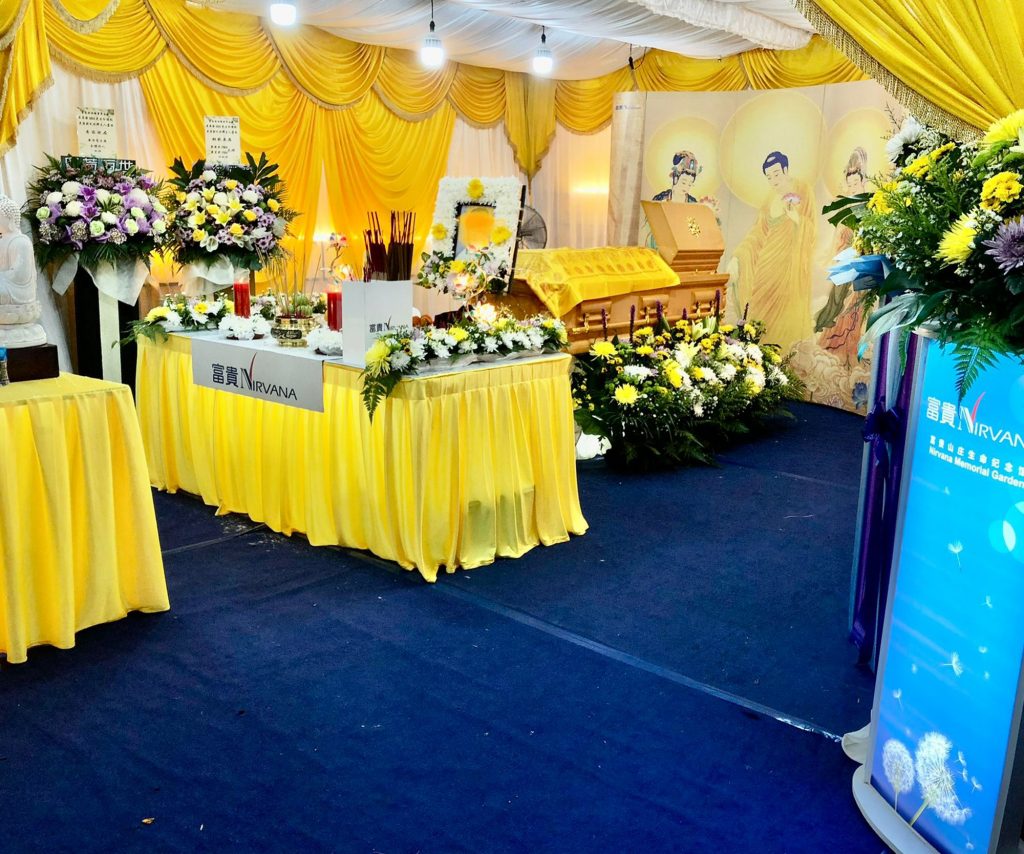
Keep the funeral service agreement with its current explanation
The service agreement should remain connected to the arrangement the family has actually chosen. If the proposal has been revised, identify which version is current and keep relevant written explanations with it. A relative joining later should not have to compare several unlabelled documents.
Our funeral and memorial services include funeral packages, niche lots and ancestral pedestals. Label the record for each arrangement before handing it to the next contact. If an arriving brother opens a niche agreement while looking for the funeral plan, a short explanation can save him from asking the wrong service question or assuming that the farewell has already been arranged.
An advance funeral agreement needs an activation contact
Where an existing plan is being used, retain the agreement and the relevant service contact together. Ask how the selected arrangement is activated and what information is still needed. The incoming family contact should understand the actual scope, not only that a parent had planned ahead.
A niche purchase, a funeral plan and an ancestral pedestal arrangement are different records. If the family has one, explain which one it is. This prevents an arriving sibling from starting a new conversation about a choice that has already been made, or assuming a missing service is included.
Ada, our service director, assists families with planning. If the departing relative has already discussed the agreement with her, note which point was answered and which remains open. The arriving contact can then continue that enquiry accurately, rather than ask the same question without knowing why the earlier answer mattered. Keep the actual agreement available for the terms instead of relying on the departing relative’s summary alone.
Requested funeral additions should show whether they were approved
A departing relative may have asked about an optional service without deciding to proceed. Record the enquiry as an enquiry. If a change has been agreed, keep the written description and any relevant adjustment with the current proposal. Do not leave the incoming contact to guess from a brief message saying it was discussed.
The same applies to family suggestions. A relative may have proposed an extra arrangement in a group conversation, but the appropriate person may not have approved it. The provider should receive a clear instruction through the agreed channel, rather than several competing versions of the family’s wishes.
Niche records should identify the actual memorial choice
Once the conversation includes a resting place, keep the venue, suite and exact arrangement reference with the proposal. An attractive photograph is not enough to identify the selected niche. Label images and notes so another relative understands whether they show a viewing option or the confirmed choice.
At Nirvana Memorial Garden, our private columbarium options span three blocks and varied suites. A photograph without its reference can therefore leave the incoming contact unsure which place the family considered. Put the exact offered reference beside the relevant image and proposal. The new contact should also know whether the image shows a shortlisted option or the niche actually identified in the agreement.
A temple niche and an ancestral pedestal need distinct references
At Lin San Temple, families can explore niche and ancestral pedestal options within a Buddhist setting. Those arrangements have different purposes. Keep the relevant reference and terms with each rather than use one broad label for both.
For relatives unfamiliar with the choices, our article on columbarium suites and niche lots provides background. The actual record should still identify the exact option offered to the family. General reading helps explain the subject; it cannot replace the specific agreement.
If personal wording or memorial details remain to be approved, identify who will collect the information and who will review it. A change of family contact should not accidentally result in an old version being used. Keep the status of the wording beside the relevant request.
Share private funeral information according to the person’s role
A wider group of relatives may need the confirmed service location and times. It usually does not need every identity document, payment record or agreement. Prepare a visitor update separately from the private arrangement record so useful information can be shared without forwarding everything.
Ask the receiving organisation what it needs and how the information should be delivered. Follow the appropriate process rather than send sensitive material to whichever contact is easiest to reach. If a helper is only managing directions, give them the information required for that task.
Travel details should not obscure the funeral service schedule
Keep a traveller’s flight information distinct from the confirmed service timetable. When sharing times across countries, identify the relevant date and Singapore local time for the funeral arrangement. A relative should not need to work out which time zone a forwarded message uses.
If a flight changes, update the main family contact promptly. They can discuss any implication for the service with the coordinator. Do not alter the family’s published attendance information or promise a revised service timing before it has been confirmed.
For the incoming contact, a few plain-language status notes can be more useful than a list of file names. Write them against the actual arrangement, without including private identity details in the shared summary:
- Funeral discussion: name the service contact and identify the current proposal, including which family question still needs an answer.
- Existing plan: state whether an advance agreement has been located and who is checking its scope with the coordinator.
- Memorial selection: distinguish a preferred venue from an exact niche arrangement that has been confirmed.
- Personal wording: identify whether the family is still collecting details or has approved the final version for the relevant request.
- Later remembrance: describe a prayer enquiry as a separate subject unless its service has actually been agreed.
Imagine an overseas son taking over after his sister has spent the week in Singapore. She may know why the family preferred one suite, while he sees only the agreement and a photograph. A short explanation of the preference, with the exact reference, helps him continue the discussion accurately. It also allows him to raise a remaining question without unintentionally reopening a settled choice.
Now imagine that the sister had only requested a viewing. The same handoff should say that no selection has been made. This small difference changes what the incoming contact needs to do. A reliable record preserves the family’s actual position rather than make the arrangement look more complete than it is.
Carry the record beyond the travelling family’s departure
After the funeral, the family may still have questions about the chosen memorial setting or later remembrance. Our prayer services include private arrangements and seasonal observances. If the family wants to explore them, record the relevant request separately from the completed funeral service.
If the departing sibling had begun a prayer enquiry, hand over the question as well as the service contact. For example, the family may be asking about one private occasion while a seasonal observance was mentioned only as background. State that difference so the incoming relative does not accidentally turn an initial enquiry into a new instruction. The same care that protects the funeral record should protect unfinished remembrance requests.
A useful handoff can be brief: the confirmed plan, the current agreement, the relevant contacts and the open questions. Its value lies in accuracy rather than length. Before travelling, review it with the appropriate relative and tell the service coordinator about the agreed communication change.
Leaving Singapore should not mean leaving the rest of the family to reconstruct the arrangements. Keep the records distinct, the responsibilities clear and the private information with the people who need it. The next relative can then continue from a reliable account of what has actually been arranged, with more time to support the family and fewer conversations spent recovering missing details.